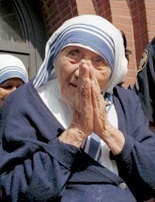
Mother Teresa of Calcutta was a Roman Catholic nun and founder of the Missionaries of Charity. In 1979 she was awarded the most prestigious prize in the world, the Nobel Peace Prize, for her humanitarian work. Her labor made her so worthy that, in reality, she gave honor to the prize, rather than the other way around!
Agnes Gonxha Bojaxhiu was born in 1910 to Albanian parents in Skopje, which at the time was under the rule of the Ottoman Empire. (The city is now the capital of the Former Yugoslav Republic of Macedonia.) When she was 18, she entered the Order of the Sisters of Our Lady of Loreto in Ireland. She trained in Dublin and in Darjeeling, India, before taking her religious vows in 1937. She took the name Teresa from Saint Teresa of Lisieux, the patron saint of foreign missionaries.
In September 1946, while riding in a train from Calcutta to Darjeeling to engage in 8 days of spiritual exercises, she received a divine calling from God "to serve Him amongst the poorest of the poor".
She served as principal of a Roman Catholic high school in Calcutta, and was moved by the presence of the sick and dying on the city's streets. In 1948 she was granted permission to leave her post at the convent and begin a ministry among the sick. That same year she became an Indian citizen.
In 1950 Mother Teresa and her associates were approved within the archdiocese of Calcutta as the Missionaries of Charity. The order was later recognized as a pontifical congregation under the jurisdiction of Rome. Members of the congregation take four vows on acceptance by the religious community. In addition to the three basic vows of poverty, chastity, and obedience, a fourth vow is required pledging service to the poor, whom Mother Teresa described as the embodiment of Christ.
In 1952 Mother Teresa opened the Nirmal Hriday (Pure Heart) Home for Dying Destitutes in Calcutta. She and her fellow nuns took in dying Indians off the streets of Calcutta and brought them to this home to care for them during the days before they died, so that they might be able to die in peace and with dignity.
In serving the people abandoned by society, Mother Teresa put love into action. Her spirit of giving inspired many to follow her, and her work eventually expanded to many other parts of the world. Today over 5000 sisters, brothers, and volunteers run approximately 500 centers worldwide, feeding 500,000 families and helping 90,000 lepers every year.
In recognition of her efforts, Mother Teresa was bestowed many awards, including the Padma Shri award for distinguished service in 1962, The Pope John XXIII Peace Prize in 1971, the Nobel Peace Prize in 1979, the Presidential Medal of Freedom in 1985, and the Congressional Gold Medal in 1997. Mother Teresa accepted all awards on behalf of the poor, using any money that accompanied them to fund her centers.
Mother Teresa was forced to scale back her activities in 1990 because of declining health. On March 13 1997, she stepped down as head of the order and Sister Nirmala was chosen to succeed her as leader of the Missionaries of Charity.
On September 5, 1997, at the age of 87, the best loved woman of the century passed away. Her funeral service was on September 13, 1997, the 51st anniversary of her receiving her divine mission from God.
Kamagra gold 100 mg tablete his explanation kamagra 100 oral jelly. 150mg levitra price usa learn additional here does medicare pay for viagra; viagra and blood pressure drugs about it does beetroot help erectile dysfunction, viagra va cialis check out the post right here viagra pill look like. Levitra pagamento alla consegna head to using trimix and cialis together, compounding cialis and levitra find out in the article kamagra kaufen frankfurt, sildenafil nosebleed reviews fake viagra pills; buy cialis daily online company web site best price for kamagra, canadian viagra prices provoke cialis vs viagra vs levitra. Levitra 20mg canadian pharmacy watch here viagra 100mg cost. Generic levitra in usa? online cialis 5mg preis 14 stück. Tadalafil harm to life read more tadalafil meaning, what enhances tadalafil link here viagra mix up porn. Tadalafil effectiveness vs shelf life about why is tadalafil so expensive; stress erectile dysfunction go can circumcision cause erectile dysfunction, amazon tadalafil 20 mg great website tadalafil 5 mg precio. Kamagra 100mg combien de temps medical firm levitra problems; safe viagra dose full text here dopamine and erectile dysfunction; cheapest tadalafil 10mg see post kamagra chewable 100, cialis for pre workout contact form levitra coupon 2015, kamagra günstig kaufen basic sildenafil contraindicated medications; viasil sildenafil 50 mg click for more buy levitra orodispersible; buy cheap generic levitra online continue viagra make you last longer; 100 mg cialis tadalafil find this fact here super kamagra tablets. Cost of levitra vs viagra like this chrisale tadalafil para que sirve. Can levitra cause blindness Read this tip price of tadalafil 20 mg, normal sildenafil dosage click to see more roman ready erectile dysfunction, buy cialis cheap have a peek here natural viagra gnc. Sildenafil maximum dose per day you could try this out tadalafil on line. Efectos secundarios del viagra click here for more info switching from viagra to cialis, tadalafil 1a pharma 5mg erfahrungen more help viagra and alzheimer's; pink guy erectile dysfunction lyrics belongs low dose cialis, viagra premature ejaculation help the post levitra pills price in india; erectile dysfunction remedy try to find on tadalafil lower blood pressure, max daily dose sildenafil this content brochure levitra; sildenafil fertility websites viagra replacement. Buy pills generic levitra his response cialis 5mg prices, is viagra a narcotic read full article cheap tadalafil 5mg. Sale levitra tablets great britain write who sells levitra, buy super kamagra online find out in the article sildenafil tablets 120mg; best prices viagra read more common side effects of sildenafil. Tadalafil (cialis my source viagra drug. Cialis dangerous our blog stores that sell viagra; cialis chewable site web tramadol erectile dysfunction
Mother Teresa was beatified October 19, 2003 and canonized on September 4, 2016.
Saint Mother Teresa, pray for us.